
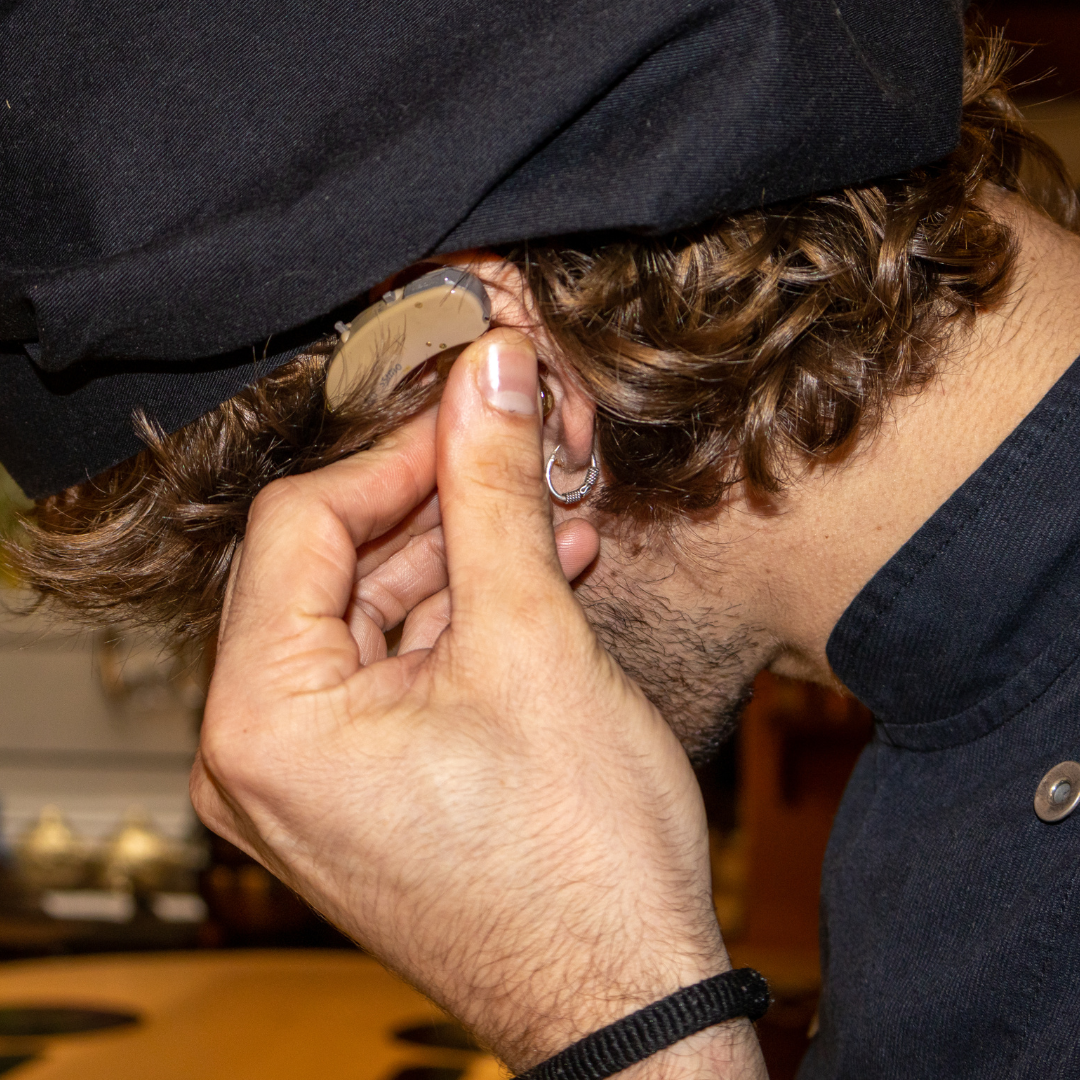
Tracking speech in busy dining venues can feel exhausting when environmental noise drowns out your hearing. Our audiology clinic conducts specialized testing to evaluate hearing in both quiet sound booths and noisy simulations to isolate the underlying cause. After diagnosing the source of your difficult hearing, we design targeted interventions tailored to your listening needs.
Why Can I Hear Normally but Struggle to Listen in a Restaurant?
Low-noise environments yield an advantageous signal-to-noise ratio where primary speech remains significantly louder than background sound. Busy dining establishments generate the exact reverse scenario. Background voices, loud music, service clatter, and wall reflections collide with spoken words, demanding heightened cognitive processing to isolate individual speech.
These communication barriers frequently indicate high-frequency hearing loss, central auditory-processing disorders, or age-related sensorineural changes. Dim lighting, physical tiredness, conversational distance, and divided attention exacerbate these listening deficits. Many individuals register normal audiometric thresholds on standard pure-tone screenings yet show profound deficits during speech-in-noise testing. Communication breakdowns in loud restaurants should be professionally assessed even if one-on-one listening feels uncompromised.
Diagnosing High-Frequency Hearing Loss and Clarity Issues
The diagnostic workup opens with an extensive intake examining difficult listening environments, past noise trauma, tinnitus presence, family history, and medical history.
Diagnostic pure-tone audiometry establishes the softest auditory thresholds you can perceive across standardized frequencies via air and bone conduction pathways. High-frequency hearing loss commonly presents on the audiogram as a characteristic precipitous drop in the higher frequency ranges. Extended test batteries incorporate acoustic tympanometry to rule out middle-ear pathology along with suprathreshold word-recognition testing.
Standard quiet test booths fail to simulate real-world restaurant noise, making speech-in-noise testing a crucial clinical tool. This diagnostic protocol measures your capacity to understand target words or sentences against progressively louder multi-talker babble. Interpreted together, these clinical scores demonstrate whether listening struggles originate from loss of audibility, speech clarity deficits, auditory processing delays, or combined elements.
How Do Auditory Processing Disorders Affect Hearing in Adults?
A diagnosed auditory processing disorder affects how the brain’s auditory cortex analyzes, organizes, and interprets sound. The peripheral auditory system may register sounds within normal limits, yet the brain falters when separating competing acoustic inputs, sorting speech sounds, or tracking fast speech. We first rule out peripheral sensorineural deficits before deciding whether a dedicated auditory-processing test protocol or specialist referral is indicated.
Effective Techniques to Hear Better in Noisy Surroundings
Small, intentional adaptations can optimize the clarity of speech reaching your ears and leverage helpful visual speech cues. Before dining out, choose a quieter restaurant or visit during an off-peak time. Settings constructed with comfortable booths, acoustic ceiling panels, drapery, and carpeted walkways facilitate easier communication than open venues with concrete and glass.
In-venue communication guidelines:
-
- Ask host staff for a quiet table distanced from kitchen traffic, bar noise, audio speakers, and loud group tables.
-
- Position your chair against a perimeter wall to diminish competing auditory chatter behind your head.
-
- Face your speaking partners directly in well-illuminated seating to maximize visual speech cues.
-
- Reduce physical spacing between yourself and companions to maximize direct speech perception.
-
- Direct your better-performing ear toward the companion you most need to understand.
-
- Encourage speakers to rephrase key information rather than simply repeating unparsed words louder.
-
- Actively confirm key information rather than smiling and guessing at ambiguous dialogue.
-
- Excuse yourself for a momentary quiet pause when listening exhaustion starts to mount.
-
- Invite companions to focus on clear articulation and a measured, comfortable cadence.
-
- Shouting creates acoustic distortion that actively compromises speech understanding rather than helping.
The Best Hearing Devices for Overcoming Restaurant Noise
Selecting the ideal assistive technology depends upon underlying diagnosis, specific acoustic challenges, and verified hearing loss. Professionally programmed hearing aids incorporate multi-channel directional microphones, digital noise reduction algorithms, and custom restaurant settings to capture frontal speech while attenuating background interference. However, users must maintain realistic expectations, as no clinical technology can eliminate every competing background speaker entirely.
Wireless remote microphones provide the most effective enhancement to real-world signal-to-noise ratios. The remote unit is attached to the speaker’s clothing or placed nearby, transmitting that voice straight into compatible hearing aids or an audio receiver. This strategy bypasses the detrimental effects of room reverberation, distance, and localized background chatter.
Further practical hearing technology options include:
-
- Portable table microphones for managing multi-speaker dinner conversations
-
- Telecoil components connecting directly to public hearing-loop systems
-
- Mobile speech-to-text applications delivering instant visual captions during dinner
-
- Earbuds or hearables with compatible assistive-listening features
-
- Sound-level meter applications and community-driven quiet dining guides
Our team can compare these systems, verify device compatibility with your hearing aids, and provide comprehensive training on their use.
Clinical Audiology Care for Hearing in Complex Noise
A thorough audiological evaluation expands the diagnostic scope well past simple quiet listening performance. We examine the challenging acoustic venues, conversational setups, and noise profiles you encounter to select appropriate diagnostic tests. Your comprehensive workup may involve pure-tone hearing thresholds, middle-ear testing, recorded word recognition, and speech-in-noise measures. Advanced auditory-processing testing can be introduced whenever medical history and baseline assessments justify specialized evaluation.
Hearing changes that present abruptly, affect only one side, or progress rapidly necessitate consultation with an ear, nose, and throat physician. Tailored audiological treatment identifies the exact origin of listening breakdown rather than assuming environmental dining noise is the sole culprit.
Schedule a Diagnostic Hearing Evaluation Right Away
If restaurant conversations leave you guessing, withdrawing, or feeling exhausted, schedule a comprehensive hearing evaluation with us. We can explore ways to help with hearing in noisy environments with hearing-aid adjustments, assistive tools, or rehabilitation options that may fit your needs.
Contact us to request an appointment and take the next step toward easier conversations.