
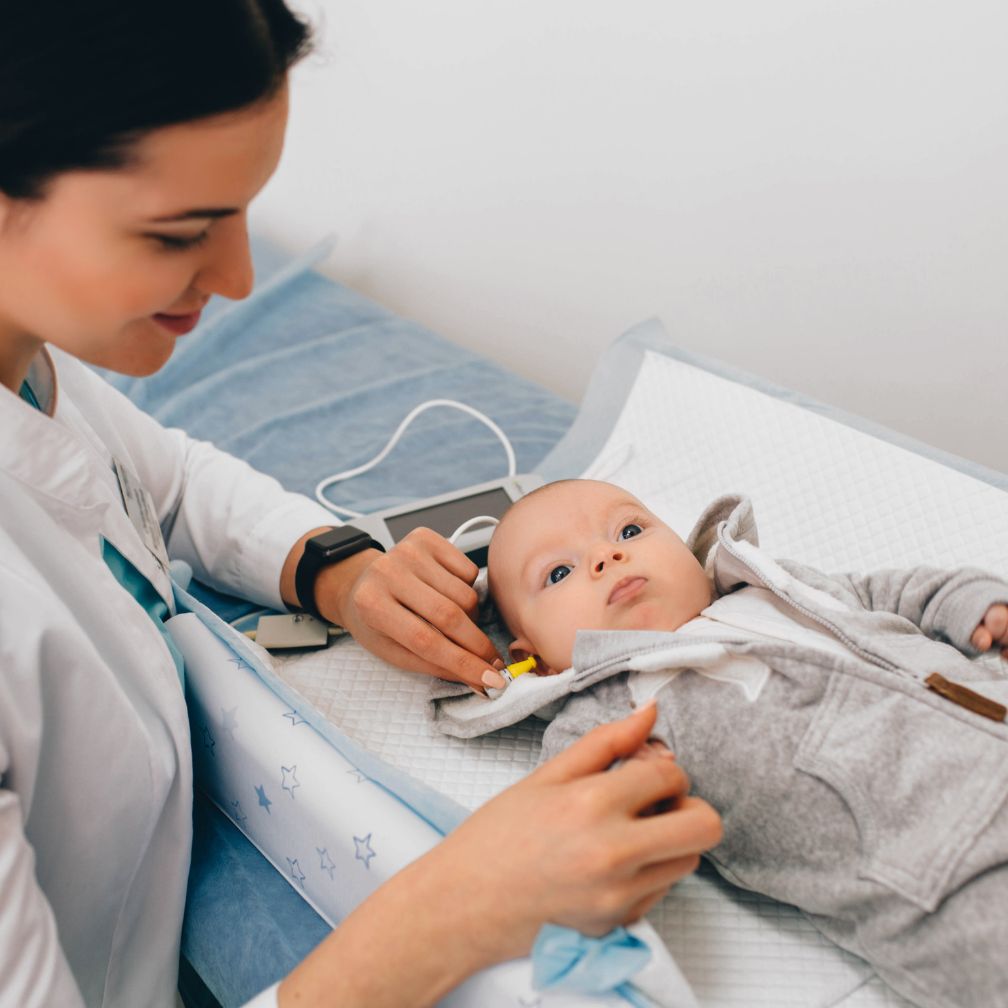
For guardians of newborns, learning that a child presents a hearing difficulty can prove extremely emotionally overwhelming. Yet the positive reality is: via timely identification and therapeutic support, children with hearing deficits are able to prosper wonderfully. Without doubt, such infants can learn communication, interactive skills, and deep connections across their social world, bringing about a truly fulfilling life!
Pairing pediatric hearing aids with cochlear implant systems provides two remarkable clinical tools for helping infants with hearing deficits. Below, we take a look at their exact mechanics and how to determine which one is right for your child.
Grasping the Basics of Pediatric Hearing Loss
Congenital auditory impairment in infants often occurs because of specific root causes, such as:
- Key inherited genetic traits (even where ancestral histories show no precedent)
- Severe perinatal infectious diseases such as cytomegalovirus (CMV) or rubella transmission
- Acute complications during birth, incorporating lack of oxygen or premature birth
- Particular ototoxic pharmaceuticals utilized in dedicated newborn intensive units
Which action represents the highest priority? Rapid clinical identification. Due to these facts, newborns in the United States receive standardized auditory screening preceding their departure from the facility. Leading pediatric auditory physicians enforce the recognized “1-3-6” diagnostic framework:
- Initial screening administered within 30 days of birth
- Definitive hearing diagnosis established within 90 days of life
- Medical intervention (incorporating corrective units or speech habilitation) launched within 6 months
Meeting these vital checkpoints secures for infants their most promising outcome regarding speech acquisition, language mastery, and intellectual development. If you seek direction on these early screenings, your family pediatrician will gladly offer support!
Deploying Hearing Aids for Newborns
For babies presenting with mild to severe auditory impairment, digital hearing aids routinely constitute the preferred initial approach. Such compact, fitted instruments intensify sound signals, helping infants distinguish human speech and natural sounds more clearly.
Specialized hearing devices for babies function as:
- Completely safe for infants merely weeks old
- Engineered using soft, comfortable ear molds that adapt as the baby matures
- Furnished with tamper-resistant battery latches and specialized pediatric safety components
- Uniquely tuned by a certified pediatric audiologist to accommodate your child’s specific hearing levels
As your baby grows, these hearing aids demand periodic adjustments to secure accurate fit and maximum benefit.
Advanced Surgical Solutions: Infant Cochlear Implants
Should an infant present with severe to profound sensorineural deficits and fails to show adequate progress with standard hearing aids, a cochlear implant may be advised. Differing fundamentally from traditional hearing devices, surgical cochlear implants:
- Are fitted directly inside the inner ear via surgery to directly stimulate the auditory nerve
- Safely bypass damaged structures of the inner ear system
- Translate acoustic signals into direct electrical impulses that stimulate the auditory nerve directly
Modern cochlear implants serve as:
- Officially cleared by the FDA for use with pediatric patients aged 9 to 12 months and older
- Maximally beneficial when paired with early speech intervention and enthusiastic family care
- Sanctioned strictly following an exhaustive clinical assessment by an expert audiologist and ENT specialist
That multi-step journey involves temporal bone imaging, comprehensive audiometric testing, and open dialogue concerning long-term communicative results.
Hearing Aids or Cochlear Implants: Distinguishing Features
- Mild to severe auditory decline uses Hearing Aids; Severe to profound auditory destruction warrants Cochlear Implants
- Non-Invasive: Hearing Aids; Invasive (Surgical): Cochlear Implants
- Traditional acoustic amplification: Hearing Aids; Digital electrical impulse transformation: Cochlear Implants
- Starts at Infancy: Hearing Aids; Starts at 9-12 Months: Cochlear Implants
Final Conclusions: Selecting the Right Path for Your Infant
If your newborn faces a confirmed hearing impairment diagnosis, you have options alongside extensive professional backing. Through the guidance of experienced pediatric audiology teams, countless infants successfully cultivate language capabilities completely equal to their hearing peers.
Irrespective of whether your child receives fitting for hearing aids or surgery for cochlear devices, early management produces a lifelong positive impact.
Are you seeking answers about your child’s overall hearing wellness? Connect with our office today to schedule a thorough assessment and individualized management strategy.