
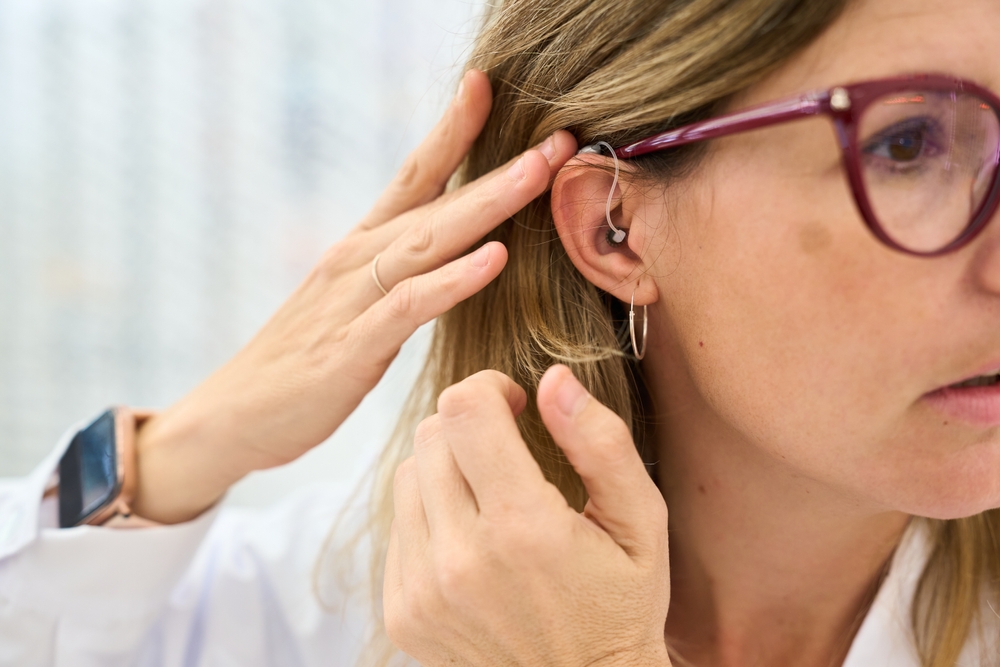
It is incredibly common for individuals to resist getting hearing instruments simply because they dread a bulky appearance or an uncomfortable fit. Historically, old-fashioned hearing hardware was bulky, obvious to onlookers, and closely linked with the stigmas of aging. Furthermore, many individuals harbored deep anxieties about social isolation, fearing others would exclude them from discussions based on assumptions of cognitive decline or profound auditory deficits.
Because this archaic mental image endures, thousands remain deeply reluctant to schedule an initial audiometric evaluation. In reality, the sophisticated hearing instruments of the present era deliver a look and feel that shatters these old assumptions. Revolutionary breakthroughs in micro-component miniaturization and ergonomic design have rendered these devices incredibly compact, ultra-lightweight, and virtually unnoticeable.
Should your reluctance stem entirely from memories of obsolete, bulky hardware, you owe it to yourself to discover current medical advancements.
The Hearing Aid You’re Picturing Doesn’t Really Exist Anymore
When most individuals conjure an image of assistive listening technology, they envision a massive beige plastic chassis hooked over the pinna and obvious to everyone nearby. If that description matches your mental model, your perceptions are anchored in the primitive analog technology of the late twentieth century.
Over the last few generations, this medical technology category has experienced a total structural evolution. Exponential leaps in digital circuit shrinking, industrial design, and audio computing have totally redefined contemporary hardware. They’re smaller, sleeker, and designed to blend in (or disappear entirely).
A multitude of current designs fit entirely inside the physical ear canal, ensuring they remain hidden from view during normal social encounters. Others rest behind the ear but are so compact and lightweight that they’re easy to overlook, especially when matched to your hair or skin tone.
Primary Hearing Aid Styles, From Invisible to Barely There
If you’re wondering what your main options in hearing aids actually look like, here’s a simple breakdown:
Invisible-in-Canal (IIC) Technology
These are as discreet as it gets. Engineered to rest deep inside the ear canal, IIC systems are individually molded to match the precise contours of your ear. When engaging with others at standard social distances, these units are utterly unnoticeable to the naked eye. They’re a popular choice for people with mild to moderate hearing loss who prioritize subtlety.
Modern Standards: Receiver-in-Canal (RIC) / Receiver-in-the-Ear (RITE)
This is the most common style today. A microscopic electronic hub is positioned behind the outer ear, anchored by an ultra-thin, transparent lead to a high-fidelity speaker seated inside the canal. From an aesthetic standpoint, they look very similar to trendy consumer tech or modern bluetooth monitors. Surrounding individuals will remain completely unaware of the technology unless they actively look for it.
Traditional Behind-the-Ear (BTE) Reimagined
These units reside entirely behind the external ear, providing a slightly larger chassis that is still infinitely more elegant than historical variations. They are typically prescribed to resolve advanced levels of hearing impairment, generating exceptional sound amplification without the cumbersome weight users traditionally dread.
The key takeaway: Today’s discreet hearing aids are designed to fit your life, not announce themselves.
How Current Hearing Technology Outperforms Traditional Amplifiers
The recent metamorphosis of hearing instruments extends far beyond mere cosmetic downsizing. Present-day models perform like advanced personal audio computers instead of basic medical listening aids. Most current systems boast universal wireless syncing, channeling smartphone calls, high-definition music, and television broadcasts directly to your internal receivers.
Equipped with dedicated smartphone applications, they allow users to manipulate volume matrices or toggle environmental programs without making manual physical adjustments. For instance, when entering a highly reverberant dining space, you can suppress ambient acoustic noise and sharpen speech clarity in mere moments. Convenient overnight charging systems have permanently replaced the tiny disposable batteries that patients traditionally struggled to replace. The process is as simple as placing the units into their charging dock each night, identical to charging your cell phone.
Empowerment Over Hesitation: Redefining Hearing Health Care
Despite understanding these technological quantum leaps, psychological resistance remains highly common. Exploring hearing aid options can be challenging on a mental and emotional level because it’s an admission that our hearing isn’t what it used to be. This realization can occasionally induce feelings of helplessness, leaving patients feeling detached from their own physical autonomy.
Consider a healthier perspective: wearing a contemporary hearing system does not mean your body has failed you. They are simply tools for managing standard lifecycle changes, which are a normal part of the human experience. Adopting this tech is definitive proof that you are actively taking charge of your health to empower and protect your daily cognitive function.
Imagine wearing a discreet, barely (if at all) visible device and finally being able to follow along in conversation, hear better in crowds, and focus on the things that really interest you. That level of sensory restoration is incredibly liberating!
See For Yourself What Today’s Hearing Aids Look Like
The most effective method to permanently banish an obsolete stereotype is to personally examine current clinical options. We invite you to come in, ask questions, and explore your options with no pressure and no commitment necessary. Treat this as a risk-free exploratory step to comprehend the incredible aesthetic shift that has occurred in our field.
Almost every visitor walks out completely shocked by how weightless, ergonomic, and cosmetically invisible these tools are in practice! Please contact our patient care coordinators or utilize our digital portal to secure your consultation this week.